Field Notes
Why Community Still Matters in Creative Work
Some performances leave a room changed.
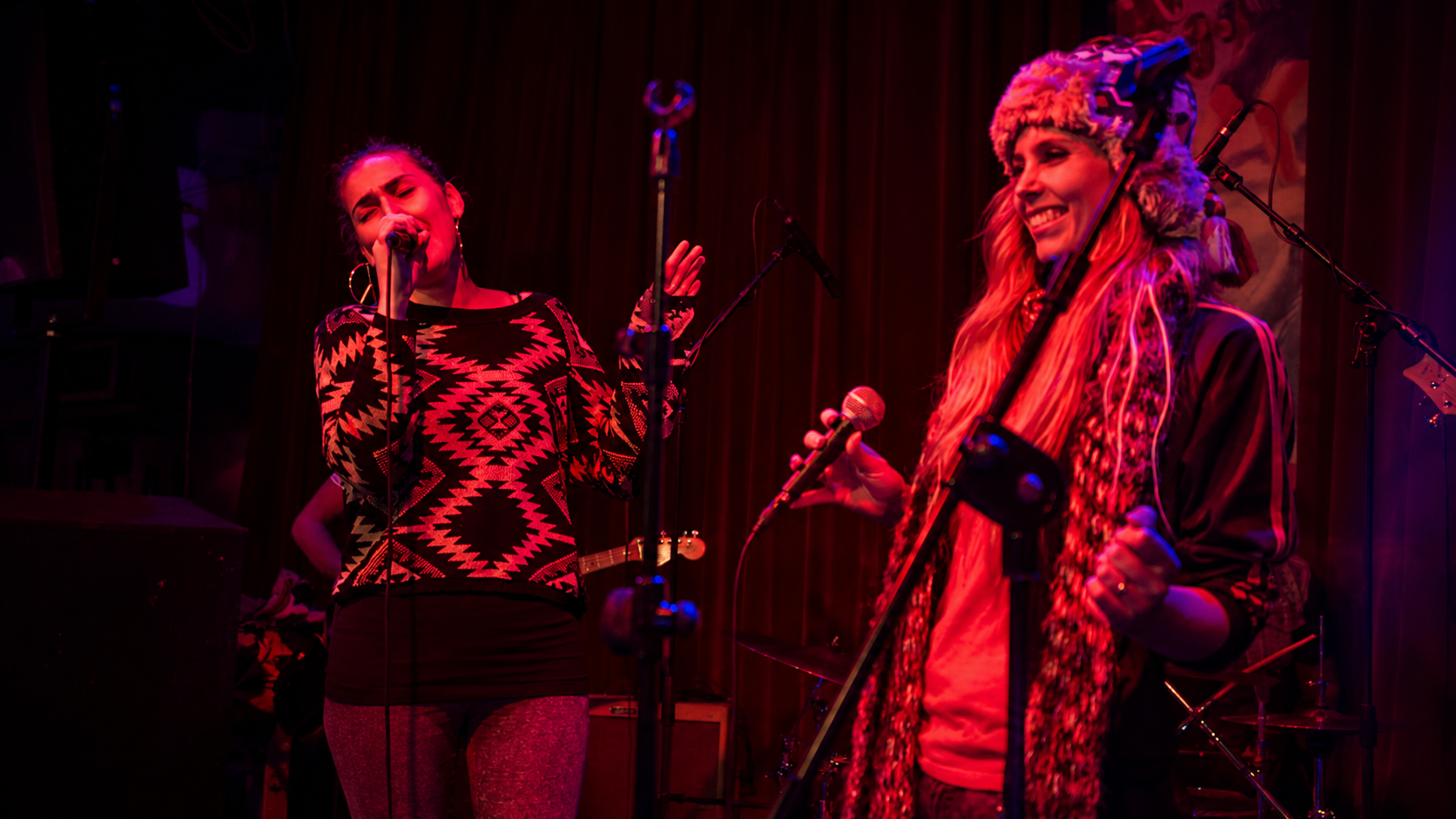
I was in a room of about 150 people.
The event was one of those industry showcases framed around opportunity. Up and coming artists playing their music for the "big guys," the gatekeepers, the ones with the connections and the checkboxes and the institutional memory of what a hit is supposed to sound like. Everyone was performing. Everyone was being judged.
And I could tell, almost immediately, what was happening.
The music coming through the speakers had a particular texture to it. A YouTube beat here. Something that sounded Suno-produced there. Hooks that were clean, competent, and somehow weightless. I found myself listening not just to the songs but to the artists behind them, asking the same question over and over: did you write this? Do you know this? Are you in here somewhere?
Most of the time, I couldn't tell.
What we are living through right now is a backwards engineering of the creative process. The old sequence, the one that produced the artists we still talk about decades later, went something like this: you find out what you're about as a person, you develop your voice, you learn your craft, you write from that place, and eventually, if you do the work, something real comes out.
The new sequence is the reverse. Song first. Then figure out how to perform it. Then become the kind of person who performs that kind of song. Then, maybe, learn how to actually sing.
And here is what I can tell you with certainty: most artists stop the moment they reach the part where they have to learn how to sing. Because that part is hard. That part requires time and humility and the willingness to be bad at something before you get good. And there are too many tools available right now that let you skip it entirely.
We are living in an era of incredible creative handicap dressed up as creative freedom.
The gatekeepers in that room were doing their best. Sharp, experienced, industry-fluent. But even they couldn't quite name what was missing. They checked their boxes, the ones taught to them by decades working inside major label infrastructure, and moved on. What they were listening for and what the music was actually lacking were two different things. The craft. The journey. The character development. The vulnerability. The proof that an artist had lived inside their work long enough for it to mean something.
Not every artist that night was working from a template.
There were one or two, maybe three, where the energy in the room changed the moment they started. Not because of production quality or a perfectly crafted hook. Because of something underneath all of that. A specificity. A point of view. The feeling that this person had something to say and had taken the time to figure out how to say it.
"You can't manufacture that shift. You can't prompt it or produce it or fast-track it. It happens when real music meets real people, and it is unmistakable when it does."
The gatekeepers felt it too. Even if they didn't reach for it with the same language I would.
When you are in a room with 150 other creatives, you feel what you are up against. Not in a discouraging way. In a clarifying way. You hear the gap between the music that moves people and the music that doesn't, and you feel it in your body before you can explain it in your head.
That feeling is irreplaceable. No algorithm surfaces it. No playlist delivers it. No amount of streaming data recreates the experience of being in a room where something unexpected happens and everyone present knows it at the same time.
"Community is where artists find out the truth about their work."
Community is where artists find out the truth about their work. Where the backwards engineering process gets interrupted. Where someone hears what you made and asks a question you weren't prepared for, and that question sends you back to the beginning in the best possible way.
Over time, that process restores things. It brings back the appetite for artist development, for real collaboration, for the kind of creative growth that only happens when you are around other people who are also doing the work. It restores the human need for a genuine creative outlet. And with that, slowly, it restores longevity to an industry that has been quietly running on borrowed time.
Real music still has a place. I watched a room of 150 people prove it.
The question is whether artists will do the work to meet it there.
Continue Reading
More from the Press

Ina Bravo